Cleaning risk assessment. A printable general risk assessment for cleaning work — slips, manual handling, working alone, electrical equipment, height and the public, with the controls that apply to this site.
This is the paper version. CleanOptix does the same job on a phone, with the record filed against the site and the cleaner automatically.
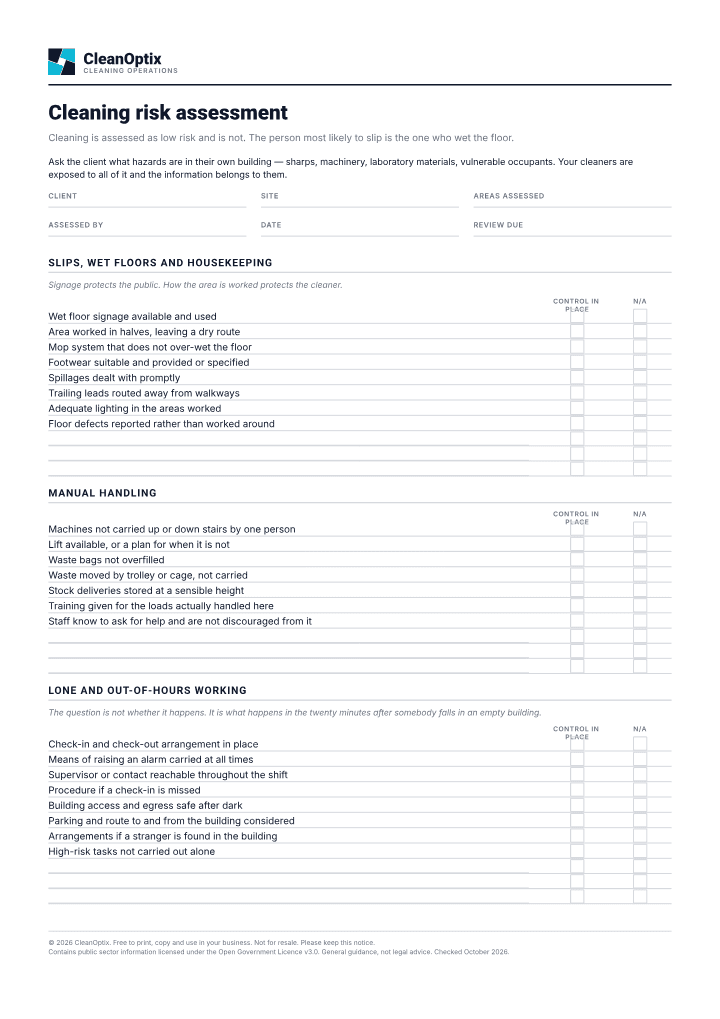
What is on the sheet
- Site, areas, the tasks assessed and who carries them out
- Slips and wet floors, including signage, timing and routes around a wet area
- Manual handling: machines, waste, stock and the way bins actually get moved
- Lone and out-of-hours working, including how somebody raises an alarm
- Electrical equipment, trailing leads and the condition of the machines in use
- Working at height, the public and clients' own hazards, each with a control and an owner
Why this record matters
Cleaning is assessed as a low-risk activity and is not one. The injuries are real and predictable — slips on floors the cleaner has just wet, backs hurt moving machines up stairs, hands cut on waste nobody warned them about — and nearly all of them are foreseeable from a walk of the site.
Wet floors get the most space because the person most likely to slip on a wet floor is the one who wet it. Signage protects the public; the control that protects the cleaner is how the area is worked — which half first, which route out, and whether anybody is coming the other way.
Lone working is treated as the condition it is rather than as a hazard to tick. Most commercial cleaning happens when the building is empty, and the question is not whether lone working occurs but what happens in the twenty minutes after somebody falls off a step stool in an empty building.
The client's own hazards are on the sheet because a cleaning contractor is assessing somebody else's building. Sharps in a medical practice, machinery in a workshop, chemicals in a lab — the cleaner is exposed to all of them and the information belongs to the client, who has to be asked.
Use it with
- COSHH assessment formA printable COSHH assessment for a cleaning task — the product, the hazards from its safety data sheet, who is exposed and how, and the controls that actually apply.
- Cleaning staff training recordA printable training and induction record per cleaner — site induction, COSHH, equipment, manual handling and what they were actually shown.
- Cleaning task checklistA printable task checklist for a shift — the areas and tasks due, ticked as they are done, with room for what could not be done and why.
- COSHH chemical registerA printable register of every product in use on a site — what it is, where it is stored, which assessment covers it and whether its safety data sheet is current.
Read more on this
© 2026 CleanOptix. Free to print, copy and use in your business. Not for resale. Please keep this notice.
Contains public sector information licensed under the Open Government Licence v3.0. General guidance, not legal advice. Checked October 2026.